
Shockwave Therapy in Ashfield
Reducing chronic tendonitis and ligament injuries
Complimentary Pre-Assessment — find out how we can help.
Book Free AssessmentShockwave therapy, also referred to as radial pressure shockwave therapy, is a treatment for the management of pain caused by various musculoskeletal disorders and injuries. It is a non-invasive but powerful treatment with few potential complications and a fast return to normal activity.
Originally developed for kidney stone treatment, researchers discovered that shock waves also have significant healing effects on bone, cartilage, and soft tissues. The treatment accelerates the healing process by activating the body's self-healing abilities.
How Does Shockwave Work?
Shock waves are intense, short energy waves that move faster than the speed of sound. The treatment produces four phases of physiological effects: mechanical pressure effects, physical-chemical interactions, chemical molecular changes, and physiological responses.
- High positive pressures of more than 100 MPa
- Extremely short rise times (about 10 microseconds)
- Fast pressure rises (less than 10 nanoseconds)
- Narrow effective beams (2-8mm diameter)
What a Session Involves
Your first appointment starts with an assessment rather than the device. We take a history, test the movements that reproduce your pain, and palpate the area to locate the tissue involved. Shockwave is only used once we are confident it suits the problem in front of us.
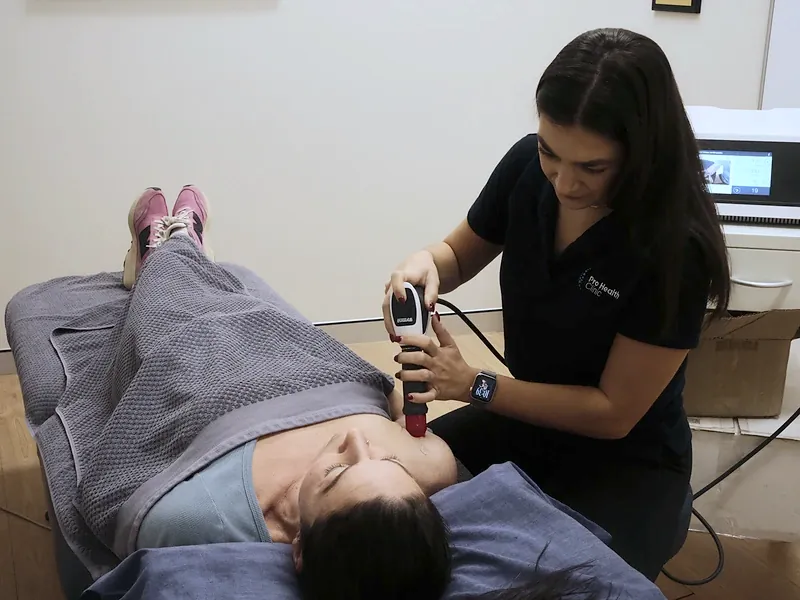
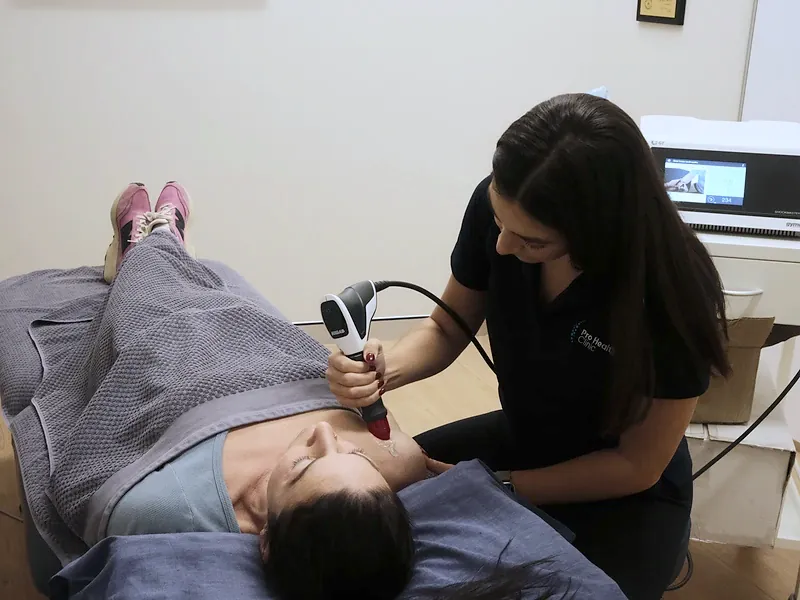
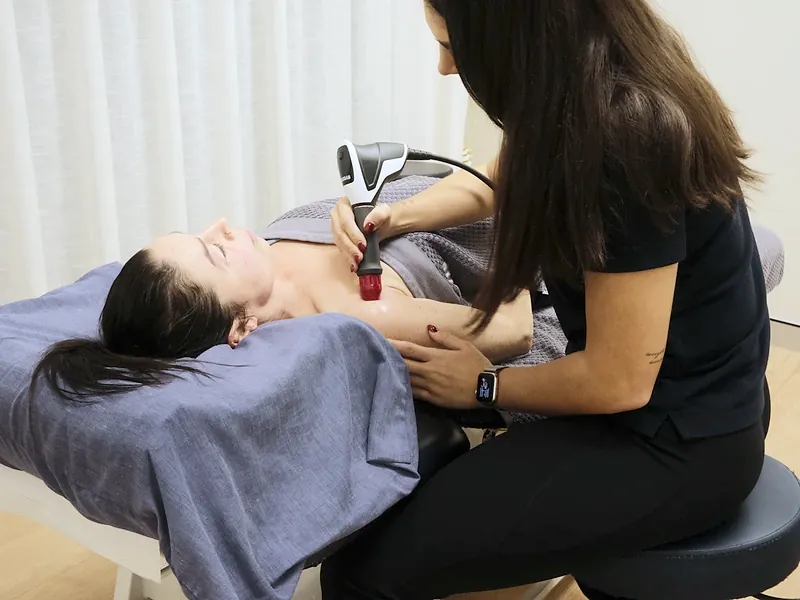
For treatment itself, ultrasound gel is applied to the skin so the pressure waves transmit properly, and the handpiece is moved over the target area. Most areas take three to five minutes. Intensity is dialled up gradually and adjusted to what you can tolerate — tell your practitioner if it is too much, as the setting can be changed at any point.
- Assessment and diagnosis before any treatment is applied
- Three to five minutes of treatment per area
- Intensity adjusted to your tolerance throughout
- No anaesthetic, injections or incisions
- You can drive yourself home and return to work the same day
How Many Sessions You Might Need
Shockwave is a course of treatment rather than a single visit. Most protocols run to three to six sessions spaced about a week apart, which gives the tissue time to respond between appointments.
Chronic tendon problems that have been present for months typically need the full course, and it is common for improvement to become noticeable partway through rather than immediately. Your practitioner will reassess as you go and stop the course early if it is not helping — there is no benefit in continuing a treatment that is not working for you.
What to Expect Afterwards
Some soreness, redness or mild swelling in the treated area over the following 24 to 48 hours is a normal response and usually settles on its own. A small number of people notice a temporary increase in symptoms before improvement, which is why we space sessions a week apart.
- Avoid high-load activity through the treated tendon for 48 hours
- Keep moving normally — complete rest is not the goal
- Ice is not usually recommended, as the inflammatory response is part of the mechanism
- Check with your practitioner before taking anti-inflammatory medication around treatment
When Shockwave Is Not the Right Choice
Shockwave suits a fairly specific set of problems, and there are situations where we will recommend something else. Tell your practitioner about your medical history and any medication you take, including over-the-counter and blood-thinning medication, before treatment begins.
- Over growth plates in children and adolescents who are still growing
- During pregnancy
- Where there is a bleeding disorder, or while taking anticoagulant medication
- Over an active infection, open wound or known tumour in the treatment area
- Within about six weeks of a corticosteroid injection to the same site
- Directly over nerve or major blood vessel structures, or over a pacemaker
How It Fits With the Rest of Your Treatment
Shockwave is rarely used on its own. Tendon problems respond to loading, so the device is generally paired with a progressive strengthening program that continues well after the course of shockwave finishes — the treatment settles symptoms enough for you to tolerate the exercise that produces the longer-term change.
Depending on what your assessment finds, that may sit alongside manual therapy to address movement restrictions elsewhere in the chain, footwear or technique advice, and a graded return to the activity that brought you in. Because chiropractic, rehabilitation all run from the one clinic in Ashfield, this is coordinated within the same treatment plan rather than across separate referrals.
Conditions Treated
Inside the Clinic
A look at what to expect from shockwave therapy when you visit us in Ashfield.
Serving the Inner West & Surrounding Suburbs
Pro Health Clinic is located in Ashfield — conveniently accessible from across Sydney's Inner West. Select your suburb for local information and directions.